- Austral Insights
- Posts
- Austral Insights #19
Austral Insights #19
By Fernando Prats

Austral Insights
July 03, 2025
Welcome to Austral Insights, your go-to source for understanding Argentina's key developments. Each week, we bring you concise, business-focused insights into the country’s politics, economy, and strategic sectors—providing the local perspective you need to make informed decisions.
Argentina by the numbers:
Exchange rate | ARS 1248/USD (+ 3.75% WoW) |
Country Risk (EMBI)* | 701 (- 1.82% WoW) |
S&P Merval Index** | ARS 1,787,025.31 (+ 23.24%, - 19.4% YtD) |
*Emerging Markets Bond Index (JP Morgan)
**The S&P MERVAL Index tracks the largest, most liquid stocks on Argentina’s exchange, meeting size and liquidity requirements
This week’s highlights:
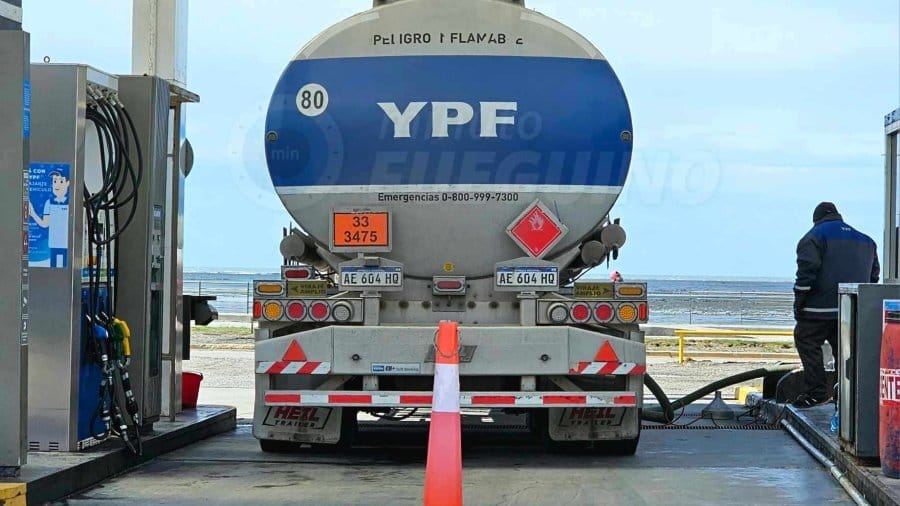
US court orders Argentina to transfer YPF shares to Burford and Eton Park over the 2012 expropriation case, forcing Milei’s government to engage in negotiations while appealing the decision.
Government approves its first industrial RIGI project (Sidersa, USD 286m) and Pampa Energía submits a USD 426m shale infrastructure project for RIGI eligibility.
Inside Congress: Chaotic Lower House session ends in fights, but opposition secures future debate dates on university and pediatric health bills; Chief of Staff defends Milei’s agenda in Senate before walking out after clashes.
What do Argentines think? Government confidence falls 4.6% in June but remains historically strong, keeping Milei well-positioned ahead of October midterms.
YPF
What happened?
A US court has ordered the Argentine state to transfer its shares in YPF to the funds Burford Capital and Eton Park as partial payment for the 2012 expropriation of the oil company. Burford had acquired litigation rights from Petersen Energía Inversora SAU and Petersen Energía SAU, two minority shareholders (holding 25% collectively) who were not offered the same buyout terms extended to Spain’s Repsol during the expropriation. This violated YPF’s bylaws, which required the new controlling shareholder to launch a tender offer for remaining shareholders in the event of a change of control.
What’s next?
Judge Preska—who ruled in 2023 that Argentina must pay USD 16bn—ordered the transfer of shares to a New York bank after Argentina failed to post the required guarantee during its appeal process. While it is unlikely the transfer will actually take place, the ruling will force Milei’s administration to engage in negotiations after months of minimal attention to the case. Milei announced that Argentina will appeal the decision.
What are the implications?
A significant operational or pricing impact on YPF is not expected beyond the short-term volatility we have been seeing, as the lawsuit is against the Argentine state, not YPF directly. However, some analysts note potential longer-term reputational risks for YPF and its strategic projects.
Politically, while this represents a headache for Milei’s administration, the government is already moving to place the blame on Buenos Aires Governor Axel Kicillof, who oversaw the partial nationalization of YPF in 2012. This angle will be important as the Buenos Aires provincial elections in September and the national midterms in October approach.
Credit to: minutofueguino.com.ar
RIGI
Two notable investment announcements were made this week regarding the Incentives Regime for Large Investments (RIGI), each at a different stage:
The government approved RIGI eligibility for its first purely industrial project, a USD 286 million investment by Sidersa to build a plant in San Nicolás, ~250 km from Buenos Aires. The plant will produce high-technology long steel products and is expected to begin operations in 2028. This is the largest commitment by the Argentine steel sector in 40 years.
Pampa Energía, a leading player in Argentina’s natural gas sector, submitted a request to join RIGI for a key infrastructure project in its Rincón de Aranda shale oil field in Neuquén. The USD 426 million project will involve designing, building, and operating a Central Processing Facility to process, store, and transport oil and natural gas from the site.
Inside Congress
A session in the Chamber of Deputies was abruptly cancelled following a scandal that saw deputies physically confront each other on the floor. Before the session collapsed, the opposition had succeeded in securing scheduled debate dates for key bills, including on university funding and the declaration of a health emergency for pediatric care at Garrahan Hospital, ensuring these issues will be taken up in a future session.
On June 26, Presidential Chief of Staff Guillermo Francos appeared before the Senate for an informative session, where he defended the libertarian administration’s “radical” economic transformation, the resurgence of the energy sector, and the effort to “revalue the role of the private sector”. The session, already tense due to the political fallout from Cristina Kirchner’s conviction, ended abruptly when Francos walked out after a Peronist senator called him a “liar.”
What do Argentines think about…?
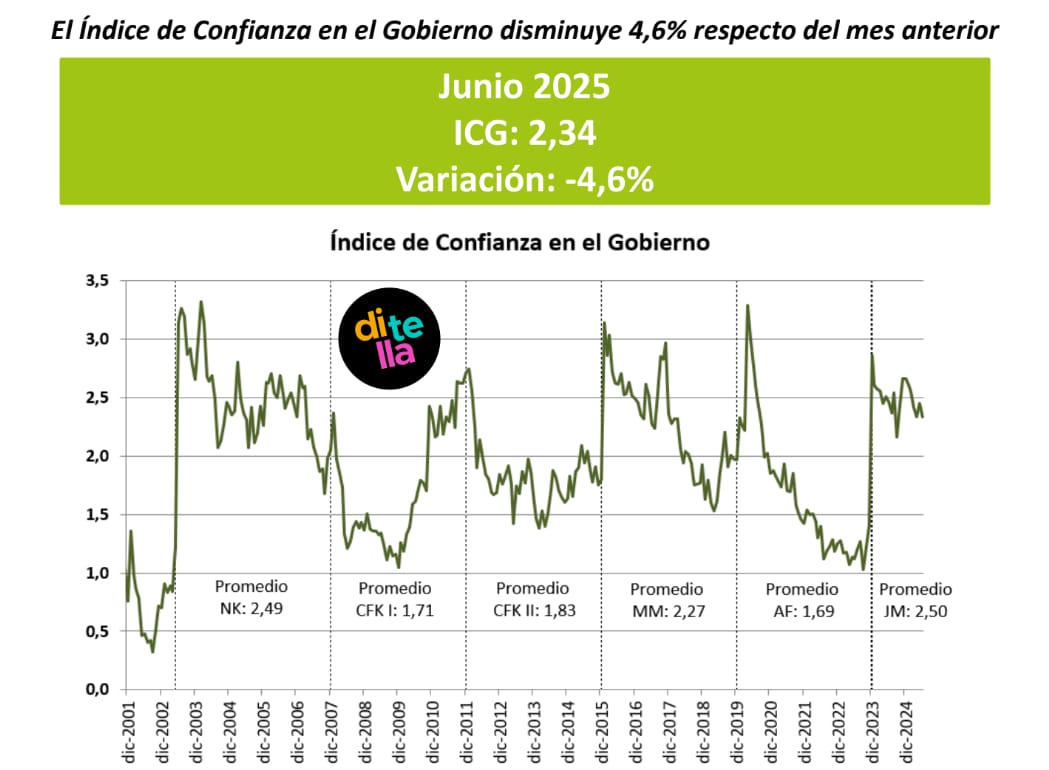
The June 2025 Government Confidence Index by Universidad Torcuato Di Tella fell by 4.6% from May, correcting downward after the spike following the lifting of FX controls.
The ICG has returned to levels seen in April 2025, the lowest since the downward trend began in December 2024. Historically, the index remains 37% higher than Alberto Fernández’s rating in June 2021 and 2.6% above Mauricio Macri’s in June 2017, indicating relatively strong positioning for the administration.
While the Milei administration should note this downward trend, it remains in a favorable position compared to previous administrations at this stage. Notably, Macri’s strong midterm performance in 2017 came despite a similar rating, suggesting that Milei’s administration remains the frontrunner heading into October’s midterms.
Are you interested in the risks and opportunities that Argentina presents? Is there an issue you’d like to discuss or understand in greater depth? Reach out for a free 30-minute talk at [email protected].
See you next week with more insights!